A clear place to begin
Large start, pause, and resume controls keep the main reading flow easy to find.

Access, made practical
Uplifor makes focused tools that help people reach printed information and express what matters—clearly, comfortably, and on their own terms.
The Uplifor collection
Each Uplifor app starts with one everyday barrier and works to make the next step simpler. No overloaded dashboards. No one-size-fits-all assumptions. Our current lineup includes PrintLark and Uplifor AAC, and we will add more accessibility-focused apps in the next phase.
Designed around one clear reading action
PrintLark
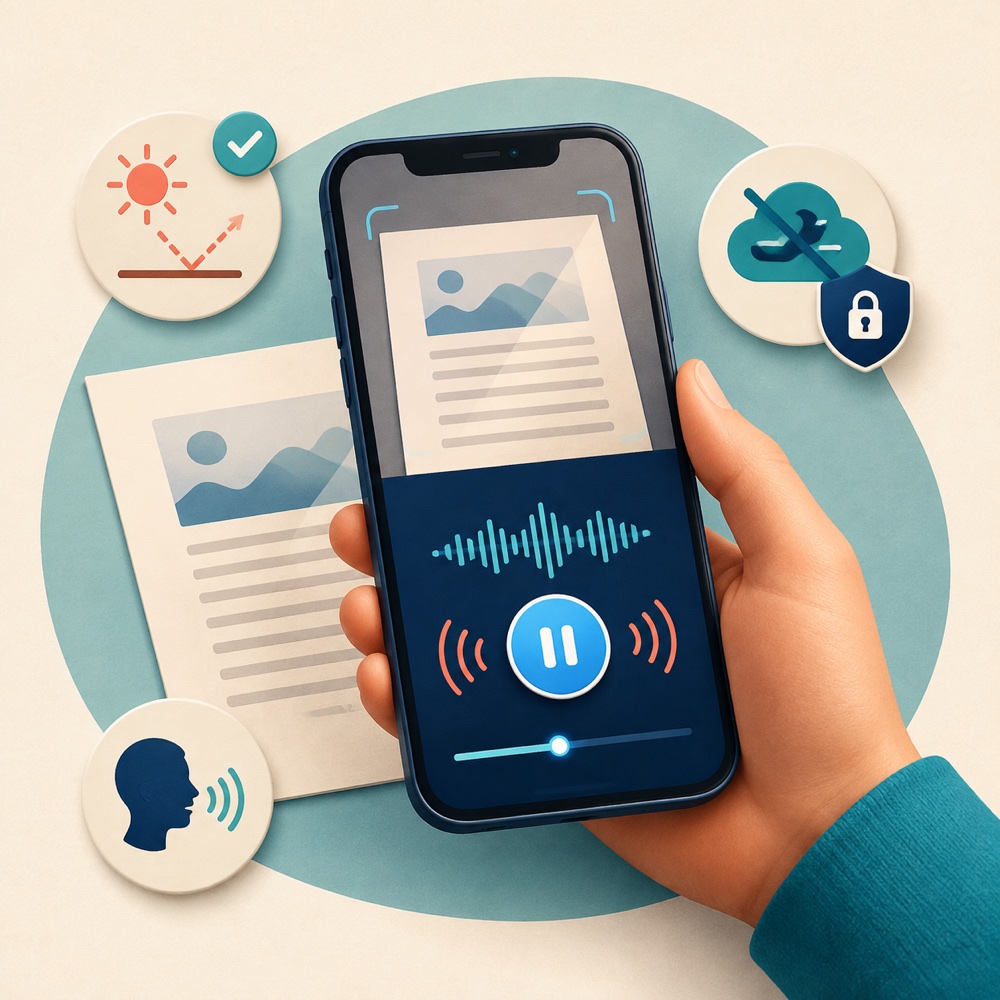
iOS & Android · Coming soonPrintLark is a camera-to-speech reader for people who find printed text easier to hear than to see. Aim at a page or choose a photo, let the app recognize the words, and listen using your device’s voice.
Large start, pause, and resume controls keep the main reading flow easy to find.
The core OCR process stays on the phone. Images and recognized text are not sent to Uplifor for recognition.
Prompts can help you respond to blur, glare, framing, and low light before the app reads.
English, Spanish, French, German, and Portuguese are planned at launch. Spoken voices depend on what is installed on the device.
Available in a modern web browser
Uplifor AAC
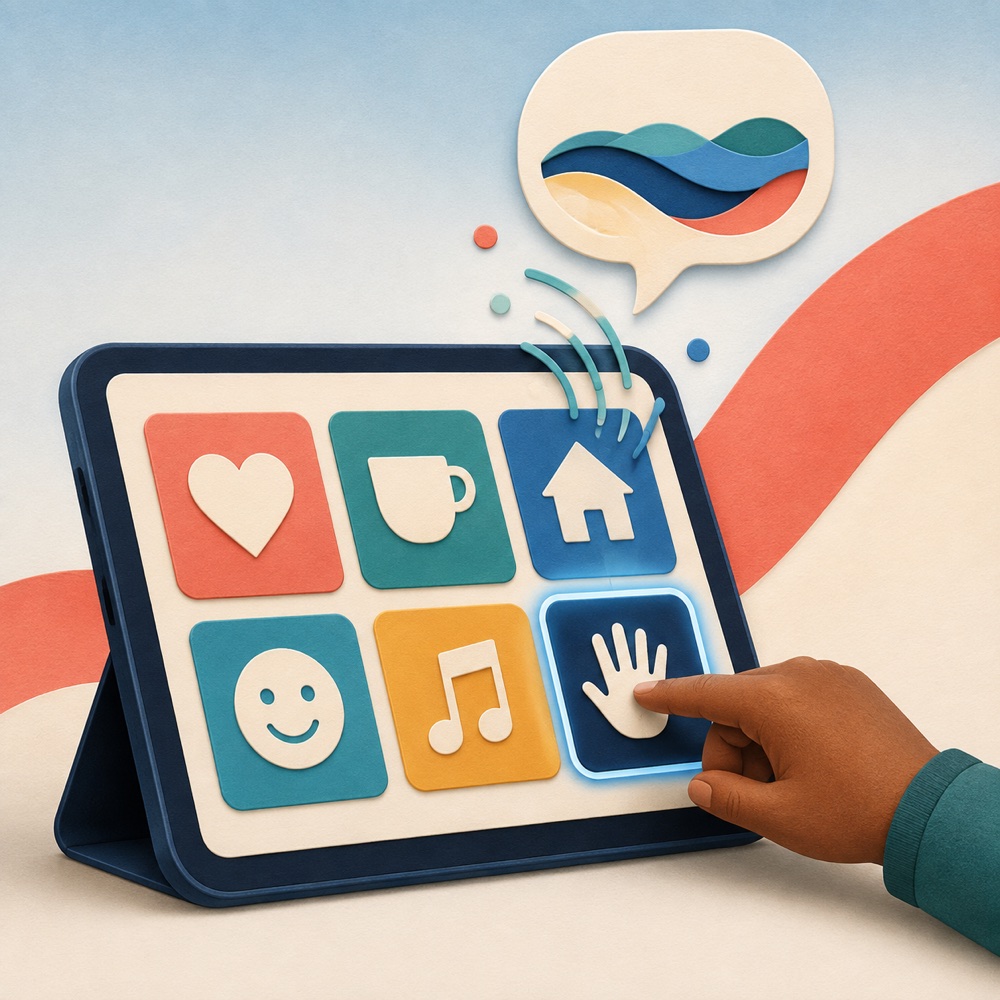
Web app available · iOS & Android launching nowUplifor AAC is an augmentative and alternative communication app. Tap symbols and words to compose a message, then use text-to-speech to say it aloud. Boards can be shaped around a person’s vocabulary, routines, and preferences.
Choose visual tiles to build phrases and use a compatible browser voice to speak them.
Create and adapt communication boards with symbols from established AAC libraries.
Jyutping input helps Cantonese speakers search for symbols and prepare speech more quickly.
Learning activities and role-based tools are being developed for families, educators, therapists, and administrators.
Language, speech, and advanced feature support can vary by browser, device, voice availability, and product release.
How we think
Accessibility is not a special mode added at the end. It is the starting point for how Uplifor chooses, shapes, and explains every feature.
We reduce visual and decision clutter so the thing someone came to do stays close at hand.
Text, imagery, speech, touch, and keyboard access can work together instead of competing.
We describe device needs, privacy choices, and recognition limits in plain language.
An evolving practice
We aim for experiences that are understandable, keyboard-reachable, visibly focused, touch-friendly, and comfortable at larger text sizes.
Those choices are built into this website and guide our products. They are a promise of continued attention—not a claim that every experience has passed an independent conformance audit.
Good to know
Product availability and features may change as releases are prepared. We will keep this page current.
It turns printed words captured by a camera or selected from a photo into text that can be spoken aloud. It is designed for printed material, not as a replacement for a person, professional advice, or an emergency tool.
The core recognition pipeline runs on the device. Camera images and recognized text are not uploaded to Uplifor for OCR. Some separate services—such as app-store purchases, advertisements where included, or optional voice downloads—may still require a connection and follow their providers’ terms.
Yes. The web app is available now at aac.uplifor.org. Native iOS and Android editions are being launched now.
Not always. Speech output relies on compatible voices provided by the operating system or browser. Language coverage and voice quality can differ by device, browser, and installed voice packs.